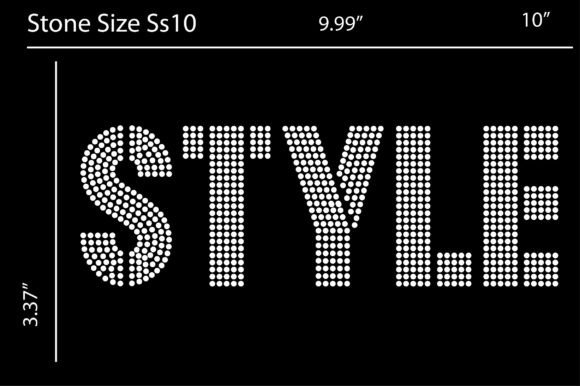
Reviewing Style, Rhinestone Design for Embroidery Projects
As a designer who has spent years translating digital concepts into tangible threads, I approach every new asset with a critical eye. It is not enough for a graphic to look good on a screen; it must survive the needle, the hoop, and the wash cycle. Recently, I evaluated Style, Rhinestone Design.... to determine its viability for real-world applications. This is not just a theoretical review of aesthetics but a practical assessment of how this asset functions within the workflow of a serious craft business or boutique embroidery studio.
The first impression of Style, Rhinestone Design.... is one of polished versatility. The visual personality suggests a blend of modern elegance and classic appeal, making it suitable for a wide range of demographics. When I opened the files, I was looking for clean lines and balanced negative space, two elements that are crucial for successful digitizing. The design’s layout appears thoughtful, avoiding the clutter that often plagues complex graphics. For an embroidery designer, this initial clarity is promising because it suggests that the transition from a flat image to a textured machine embroidery design will be straightforward, provided the digitizer pays attention to detail.
Real-World Application: The Custom Tote Test
To truly understand the potential of any design, you must imagine it on a product. I visualized Style, Rhinestone Design.... applied to a heavy canvas tote bag design. This is a staple item for many Etsy sellers and small shop owners. The 10 by 10 inch file size mentioned in the product details is generous, allowing for a bold statement piece on the front of a bag or a more subtle placement on a pocket.
In this scenario, the design’s ability to hold its shape under tension is key. Canvas is a sturdy fabric, but it can shift if the stabilizer is not chosen correctly. I would recommend using a cut-away stabilizer for this application to ensure the stitches remain crisp over time. The visual weight of Style, Rhinestone Design.... seems substantial enough to stand out against the textured weave of the canvas without getting lost. For a handmade product intended for daily use, this level of visibility is essential for brand recognition and customer satisfaction.
Versatility Across Apparel and Home Decor
Beyond tote bags, this asset shows strong potential for custom apparel. Imagine it as sweatshirt embroidery on a high-quality cotton blend. The design’s aesthetic lends itself well to the cozy, personalized feel that customers seek in winter wear. However, when moving to thinner fabrics, such as those used for baby embroidery items like onesies or burp cloths, caution is required. The density of the original graphic must be carefully managed during the digitizing process. If the stitch density is too high, it can cause puckering on delicate materials. A skilled digitizer would likely need to adjust the underlay and reduce the number of overlapping stitches to keep the fabric soft and comfortable against sensitive skin.
For home decor, consider a pillow cover or a set of kitchen towels. Here, the design can serve as a focal point. The 300dpi resolution of the included JPG, PNG, and other formats ensures that if you are creating printable mockup images for your online store, the presentation will be sharp and professional. High-quality visuals are critical for digital product sellers who rely on images to convey the value of their finished product. The transparent PNG file, in particular, is invaluable for layering the design over various background textures in Photoshop or Canva, allowing you to showcase how the item might look in different colorways without stitching a single sample.
Navigating Technical Challenges and Fabric Choices
While Style, Rhinestone Design.... is versatile, it is not without its challenges. Any experienced embroiderer knows that certain features require careful handling. If the design includes fine details or sharp corners, these areas are prone to thread breaks or uneven coverage if not digitized with precision. I advise testing the design on scrap fabric before committing to a final piece. This allows you to check thread tension and ensure that the thread colors you have selected provide sufficient contrast.
Fabric texture plays a significant role in the final outcome. On looped towels or fuzzy fleece, small details can disappear. In such cases, you might need to simplify the design or increase the stitch width slightly. Conversely, on smooth, dark fabrics, light-colored threads can shine, but you must ensure adequate coverage to prevent the fabric from showing through. This is where the choice between satin stitch, fill stitch, and running stitch becomes critical. A well-digitized file will balance these stitch types to create depth and durability without excessive bulk.
Curved surfaces, such as caps or hats, present another hurdle. The 10 by 10 inch dimensions may need to be scaled down significantly to fit a standard cap hoop. When scaling down, verify that the text remains legible and that intricate elements do not merge together. If the design includes tiny lettering, it may not be suitable for small hoop sizes unless simplified. Always confirm the minimum viable size for your specific machine and hoop combination.
Commercial Value and Brand Consistency
For commercial embroidery professionals and craft business owners, the licensing and usability of the source files are paramount. The inclusion of vector formats like SVG, EPS, AI, and DXF alongside raster images like JPG and PNG offers tremendous flexibility. These design assets allow you to edit the design before digitizing, change colors easily, or integrate elements into larger compositions. This versatility supports brand consistency across different product lines, whether you are selling personalized gift items or bulk orders for local businesses.
However, it is crucial to note that these are digital clip art files, not necessarily pre-digitized embroidery files. You will need to convert them using embroidery software or hire a digitizer. This step is where the true value is added. A poor digitization job can ruin even the most beautiful graphic. Therefore, invest time in ensuring the embroidery file is optimized for your specific machine. Check the license terms provided with the download to confirm you are allowed to use the design for commercial purposes, especially if you plan to sell the physical items or the digital designs themselves.
Final Verdict for Makers and Designers
In conclusion, Style, Rhinestone Design.... is a robust asset for designers who understand the nuances of embroidery production. It offers a solid foundation for creating high-value items ranging from holiday embroidery gifts to everyday small shop product listings. Its strength lies in its adaptability and clean visual structure, which facilitates easier digitizing and better stitching results.
My advice to fellow makers is to treat this design as a starting point. Experiment with different fabric texture combinations, test various stabilizers, and refine the stitch path to suit your machine’s capabilities. By doing so, you transform a simple graphic into a premium embroidered patch or apparel feature that customers will appreciate for its quality and craftsmanship. Whether you are an experienced apparel decorator or a hobbyist looking to elevate your projects, this design holds significant potential when handled with care and technical expertise.