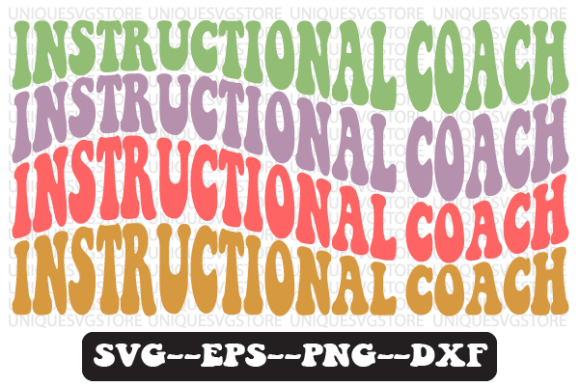
Reviewing the Instructional Coach Retro Svg Design
As a designer who spends half my life digitizing patterns and the other half stitching them out, I have learned that not every graphic translates well to thread. We often see stunning T-Shirt Designs in digital marketplaces that look incredible on a screen but turn into a tangled mess under the needle. That is why I approach every new asset with a critical eye, looking beyond the pixel-perfect preview to understand how it will behave in the real world. Recently, I took a close look at the Instructional Coach Retro Svg Design, a piece marketed as a groovy retro graphic suitable for sublimation and print. My goal was to determine if this specific set of Graphics holds up when translated into a tangible, stitched embroidery project.
First Impressions: Mood and Visual Personality
The first thing that strikes you about the Instructional Coach Retro Svg Design is its distinct mood. It captures that nostalgic, seventies-inspired aesthetic that has become so popular in educational and coaching circles. The layout feels balanced, with a playful yet professional vibe that speaks directly to instructional coaches, teachers, and mentors. From a design perspective, the shapes are bold and the theme is clear. This is crucial for embroidery because intricate, thin lines often get lost or break during stitching. The visual personality here is confident and warm, making it an ideal candidate for items meant to inspire or comfort.
However, as an experienced reviewer, I immediately noted that this is sold primarily as a printable PNG and SVG for sublimation. This means the original file is not necessarily a native machine embroidery design with pre-defined stitch types. For those of us in the craft business, this presents both an opportunity and a challenge. You have the freedom to digitize it yourself or hire a digitizer, ensuring the stitch density and pathing are optimized for your specific machine. Alternatively, if you are using it for print-on-demand or sublimation, the quality is ready to go. But for those of us wanting to create a high-value handmade product, the potential for a custom embroidered version is where the real value lies.
Real-World Application: The Custom Sweatshirt Scenario
To test the viability of this design, I imagined a real-life scenario: creating a custom gift for an instructional coach who is leaving a school district. A plain, high-quality cotton sweatshirt is the perfect canvas. I visualized placing the Instructional Coach Retro Svg Design on the left chest area for a subtle, professional look, or larger on the back for a statement piece. In this context, the retro style fits perfectly with the current trend of vintage-inspired custom apparel.
If I were stitching this, I would focus heavily on thread selection. The groovy nature of the design calls for matte threads rather than shiny rayon, perhaps using variegated threads to enhance the retro feel. The design’s structure suggests it would work beautifully with a combination of satin stitch for borders and fill stitch for larger colored areas. However, because the original asset is a graphic, one must be careful with gradient effects. Embroidery does not handle smooth color transitions well without complex blending techniques. Simplifying the color palette to three or four solid thread colors would likely yield a cleaner, more durable finished product.
Versatility Across Product Lines
Beyond sweatshirts, this design has strong potential across various categories. For Etsy sellers and small shop owners, versatility is key to maximizing return on investment. Here is how I see this design performing in different applications:
- Tote Bags: The bold lines of the retro design would stand out nicely on canvas. A tote bag design like this appeals to teachers carrying books and materials daily.
- Caps and Hats: This requires caution. Curved surfaces distort designs. If adapting this for a cap, you must simplify the center details and ensure the hoop size constraints are respected. It might work better as a smaller front-panel logo.
- Aprons and Kitchen Towels: For a personalized gift, placing this on a linen apron creates a charming, boutique feel. The retro vibe matches well with home decor trends.
- Patches: Creating an embroidered patch allows for maximum flexibility. You can stitch it on stable fabric, cut it out, and let the customer iron or sew it onto their preferred garment. This solves many fabric compatibility issues.
Technical Considerations and Potential Pitfalls
While the aesthetic is strong, there are technical areas where the Instructional Coach Retro Svg Design requires careful handling. Since it is originally a vector/raster graphic, converting it to embroidery requires attention to detail. Tiny lettering, if present in the retro font style, can become illegible if the stitches are too dense or the thread too thick. I always recommend testing the design on scrap fabric first, specifically checking the smallest elements.
Fabric texture plays a massive role here. On textured fabrics like terry cloth or heavy fleece, fine details may sink in. Using a cut-away stabilizer is non-negotiable for stretchy fabrics like hoodie material to prevent puckering. For dark fabrics, you must consider underlay stitches and potentially use a lighter top thread or add a white underlay to make the retro colors pop. Without proper stabilization and hoop tension, even the best design can look amateurish.
Another critical point is the difference between sublimation and embroidery. The product description mentions it is a "Printable png Sublimation Design." If you are an Etsy seller planning to sell physical embroidered goods, you cannot simply buy this file and stitch it. You need a digitized embroidery file (such as PES, DST, or JEF). If you are selling digital products, you must clarify whether you are selling the SVG for printing or the digitized embroidery file. Misunderstanding this can lead to customer dissatisfaction and refunds.
Enhancing Brand Value and Customer Trust
Using a well-chosen design like this can significantly boost the perceived value of your small shop product. Customers associate clean, professional embroidery with quality. When they see a cohesive retro theme on a baby embroidery item or a teacher’s tote, it signals that the maker has an eye for detail. This builds brand consistency and trust.
For commercial embroidery projects, such as bulk orders for school staff, the durability of the design matters. Embroidery lasts longer than print. By offering this retro design as an embroidered option, you provide a premium alternative to standard printed shirts. This differentiation can justify a higher price point and attract buyers looking for long-lasting holiday embroidery gifts or end-of-year appreciation presents.
Practical Designer Notes for Implementation
Before you commit to producing inventory or listing this design, follow these practical steps:
- Check Licensing: Confirm whether the license allows for commercial use of finished physical items. Most SVG licenses do, but always read the terms.
- Digitize or Buy Digitized: If you do not digitize yourself, hire a professional to convert the SVG into a stitch file. Do not auto-digitize complex retro fonts without manual editing.
- Test Contrast: Create black and white mockups to ensure the design’s shape is recognizable without color. This helps in assessing clarity.
- Stitch Out Samples: Always run a test on the actual fabric you plan to sell. Check for pull, puckering, and thread breaks.
- Optimize for Hoop Size: Ensure the design fits within standard hoop sizes (4x4, 5x7, 6x10) to maximize machine compatibility for your customers or your own workflow.
In conclusion, the Instructional Coach Retro Svg Design is a strong visual asset with great potential for the right application. It shines in contexts that value nostalgia and professionalism, such as educational gifts and boutique apparel. However, its success depends entirely on the execution. Whether you are using it for sublimation prints or taking the extra step to create a custom applique design or fully stitched emblem, understanding the technical requirements is essential. For the thoughtful craft business owner, this design offers a solid foundation for creating memorable, high-quality items that resonate with buyers.